



Hydroxypropyl methylcellulose (HPMC), as a high-performance cellulose ether, is an indispensable rheological modifier in modern dry-mix mortars and pre-mixed building materials. Its unique water solubility, thickening properties, water retention, and interfacial regulation capabilities enable it to significantly improve the workability, flow behavior, and curing process of materials, providing stable and controllable rheological behavior for mortar systems.
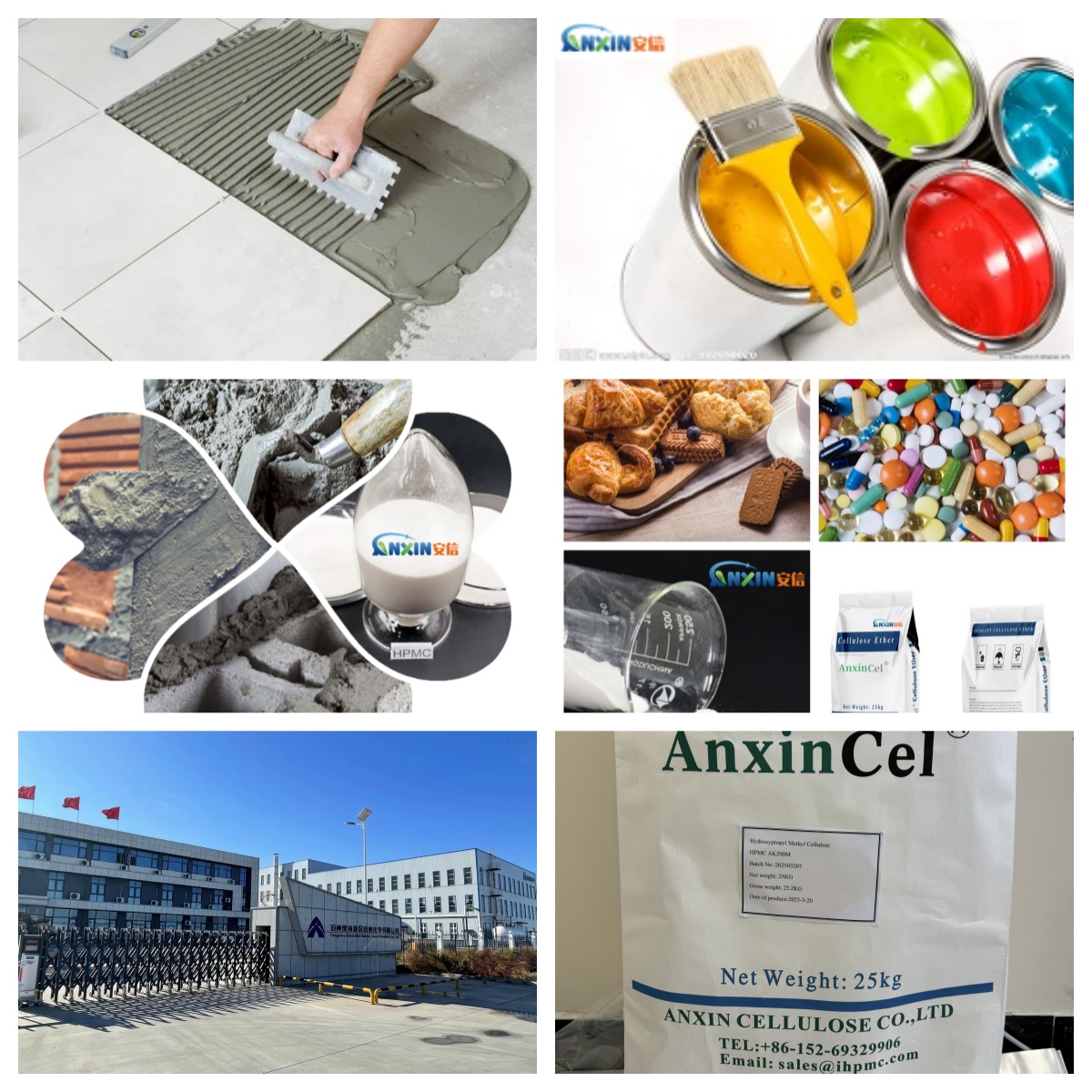
1. One of the most crucial functions of HPMC in building materials is thickening and viscosity adjustment. After dissolving in water, HPMC forms a uniform polymer network structure, which significantly increases the yield stress and cohesion of the mortar, giving the mixture a suitable consistency and thixotropy. The thickened mortar adheres better during construction and is less prone to sagging, especially in tile adhesives, masonry mortars, and plastering mortars. By controlling the type and dosage of HPMC, the fluidity of the mortar can be flexibly adjusted to suit different construction processes and substrate conditions.
2. HPMC possesses excellent water retention and the ability to delay water migration. Its molecular chains have strong hydrophilic groups that can quickly absorb water, swell, and lock in water, significantly reducing the rate of free water evaporation and absorption by the substrate. Good water retention not only improves the open time and lubricity of the mortar but also ensures that cementing materials such as cement and gypsum can react under sufficient hydration conditions, improving the final strength and density. Under high temperature, low humidity, or highly absorbent substrate conditions, the water retention function of HPMC is even more important, effectively preventing problems such as drying shrinkage cracks, delamination, and poor adhesion.
3. HPMC also imparts good thixotropy and smooth workability to the materials. Under shear stress (such as scraping or pumping), the viscosity of the HPMC solution decreases, making the mortar easier to spread or pump; when at rest, the viscosity recovers, allowing the material to quickly stabilize and set. This thixotropic behavior helps improve the handling of the mortar, making it easy to spread, non-sticky to tools, and improving construction efficiency. This shear-thinning property is particularly important in self-leveling mortars and plastering mortars, balancing fluidity and stability. 4. HPMC also possesses certain dispersion and bubble stabilization functions. Its polymer structure can form an adsorption layer on the surface of particles, improving the dispersibility of solid particles, reducing flocculation, and enhancing the uniformity and rheological stability of the mortar. At the same time, HPMC can stabilize tiny air bubbles in the mortar within a suitable range, increasing workability and making the material texture lighter and finer. However, by optimizing the system formulation, excessive air entrainment leading to reduced strength can be avoided.
5. Through its thickening, water retention, thixotropic regulation, and dispersion effects, HPMC achieves systematic control over the rheological properties of building materials, resulting in mortars with better workability, adhesion, and ultimate mechanical properties. In the future, with the development of energy-efficient buildings, high-performance mortars, and smart building materials, the rheological control function of HPMC will continue to play a greater role, providing more efficient and stable solutions for modern construction systems.
Post time: Dec-11-2025